The Birth of European Holiday
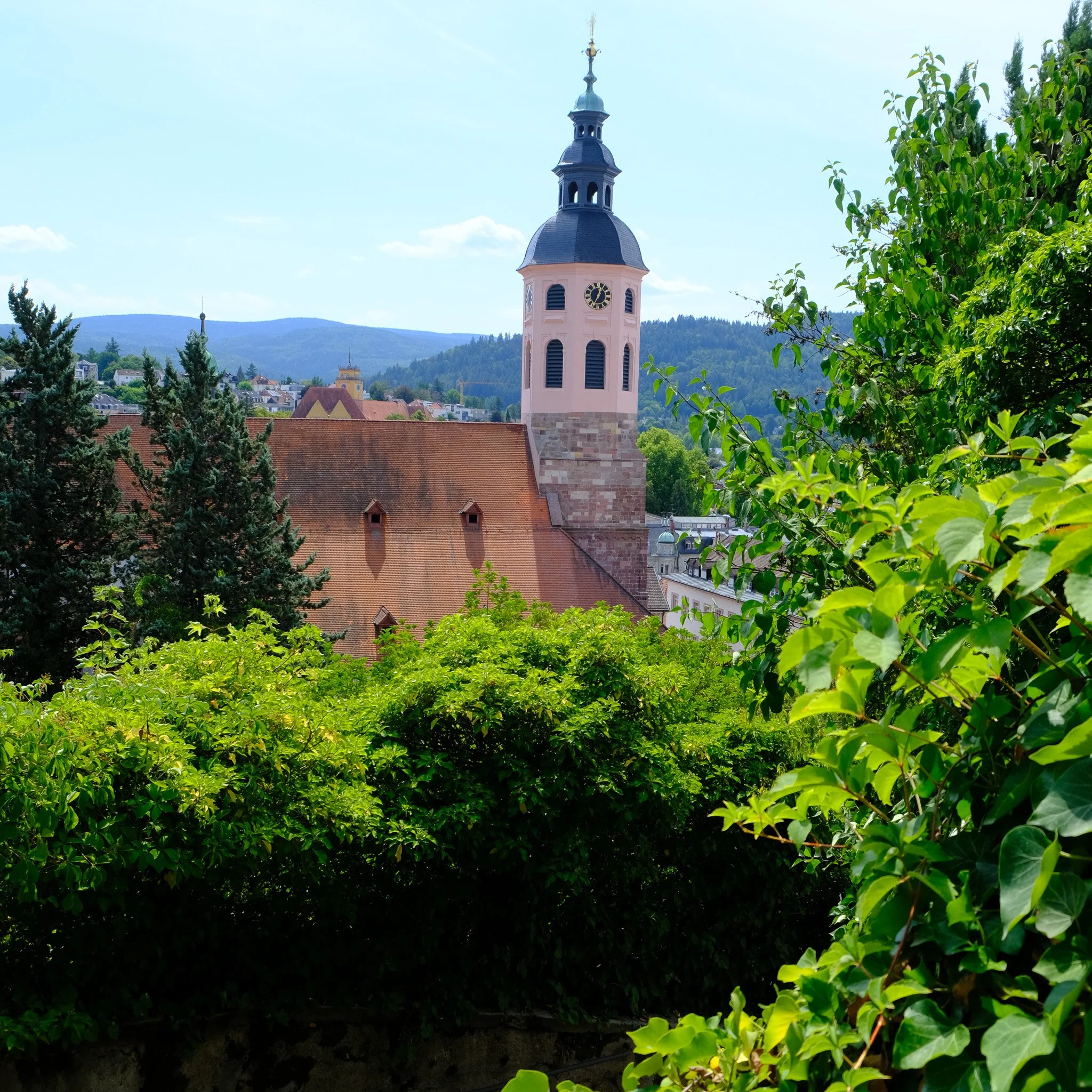
Location: Baden Baden
Country: Germany
I had never imagined myself visiting Baden-Baden until a friend who lives there suggested I come. Somehow, it felt like an invitation that had been quietly waiting in the background. I had heard of the Black Forest, of course, but I never expected that I would one day find myself there.
When they took a few days off from school and work so we could spend time together, the visit became more than just a trip. It turned into a meaningful opportunity to truly discover the place through their eyes. Being welcomed into their daily life and experiencing Baden-Baden firsthand felt like a privilege.
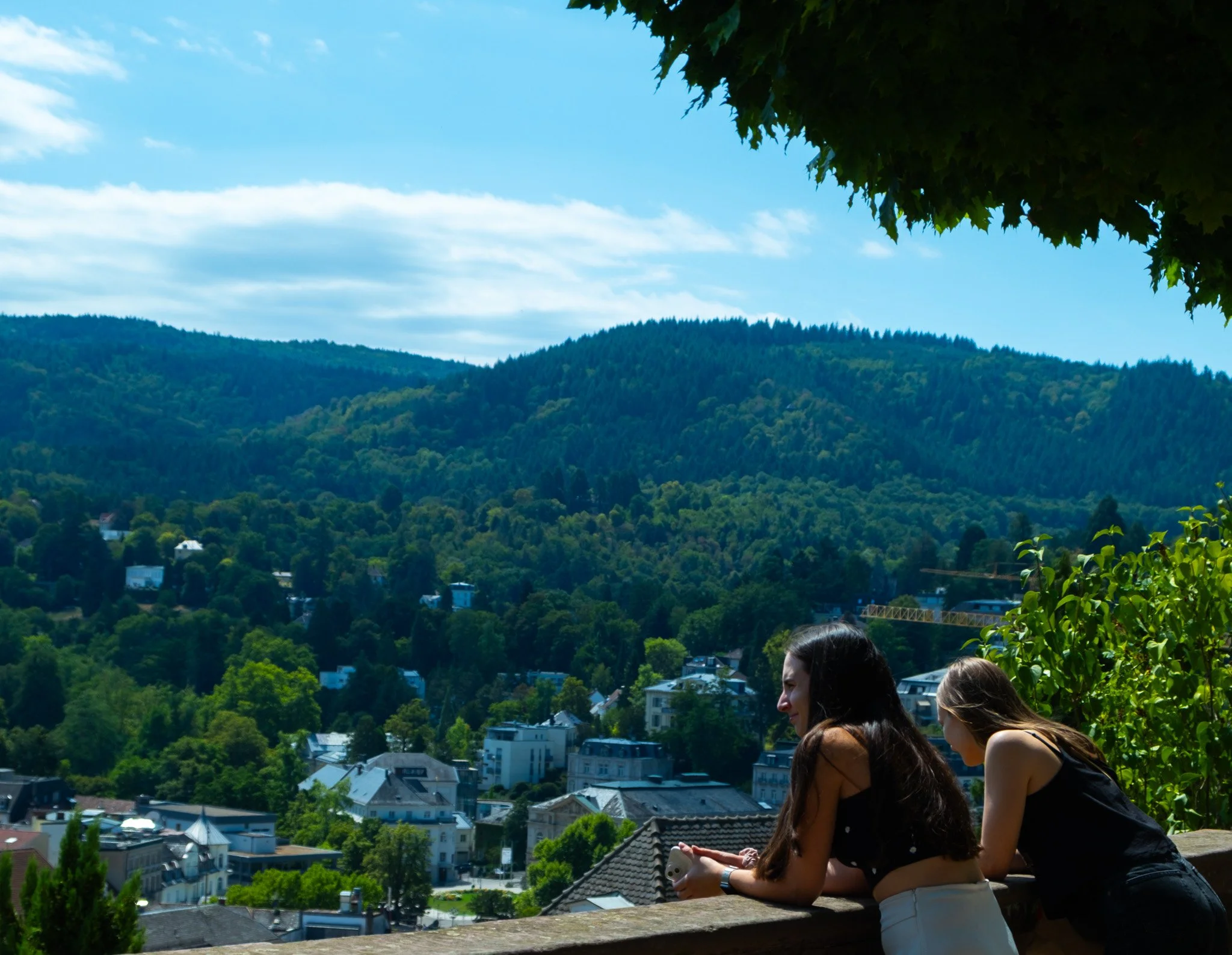
Baden-Baden and the Birth of the European Summer Holiday
Baden-Baden is one of Europe’s original summer holiday destinations. Long before beach resorts became fashionable, Europe’s elite escaped the heat of major cities by going to spa towns—and Baden-Baden became one of the most glamorous.
Roman Origins: Healing Waters
The story begins with the Romans around the 1st century AD. They discovered the town’s thermal springs and built baths there, calling it Aquae Aureliae. The naturally warm mineral waters (still flowing today) established Baden-Baden as a place of health, rest, and therapy.
Spa culture in Europe—“taking the waters”—would later become the foundation of the summer holiday tradition.
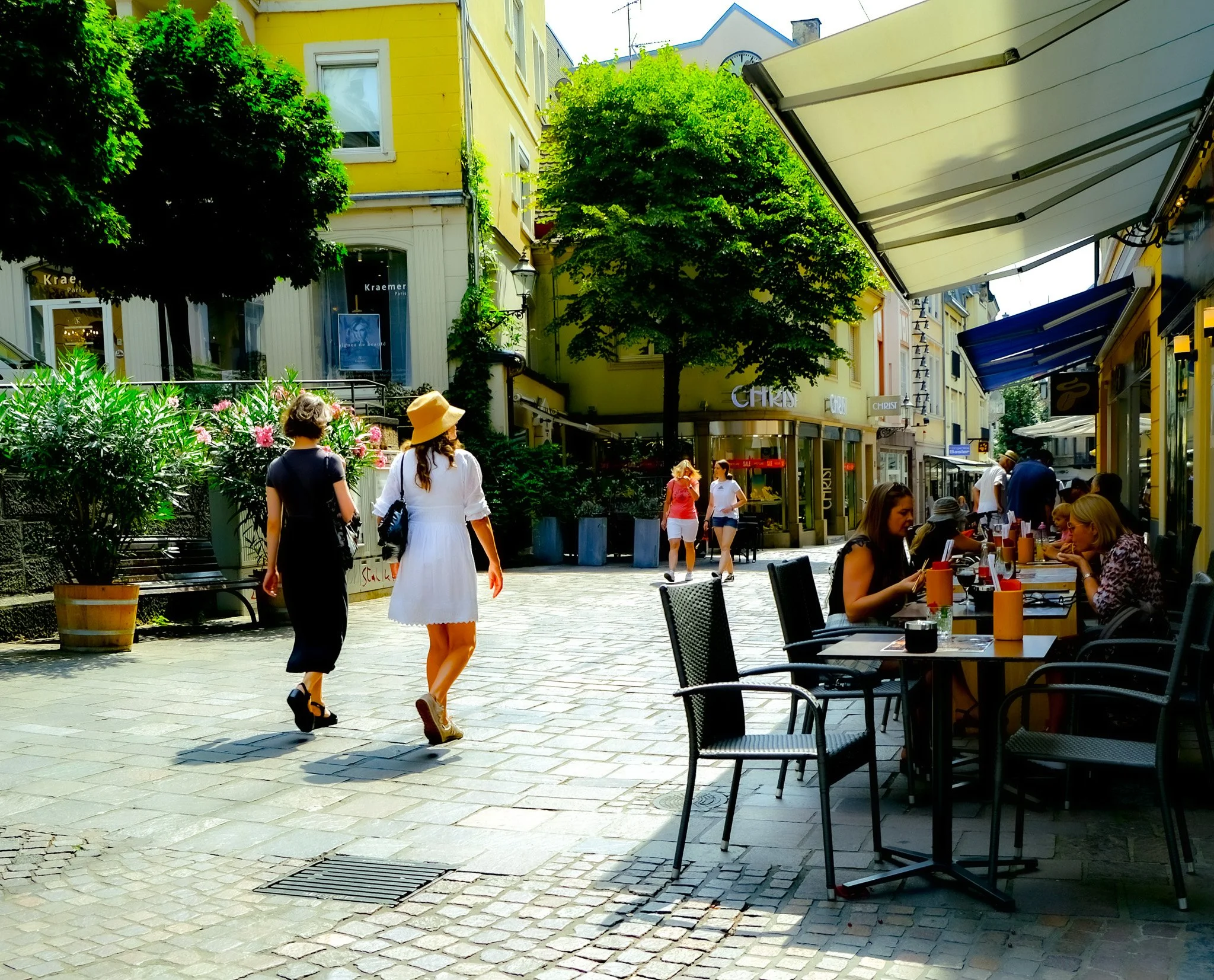
18th–19th Century: The “Summer Capital of Europe”
Baden-Baden’s golden age came in the 18th and especially 19th century.
During this period:
European aristocracy and royalty spent their summers here.
The town became known as “Europe’s summer capital.”
Visitors came from France, Russia, Britain, and across the German states.
Writers, artists, and composers also flocked there. For example, Fyodor Dostoevsky stayed in Baden-Baden and was famously obsessed with gambling there.
The elegant Kurhaus Baden-Baden, built in the 1820s, became the social heart of summer life. It included the famous casino, which attracted high society from across Europe.
Why Summer?
In the 19th century:
Big cities like Paris or London were hot, crowded, and unhealthy in summer.
Wealthy families would leave the city during the hottest months.
Spa towns like Baden-Baden offered:
Cooler air
Beautiful Black Forest landscapes
Elegant promenades
Concerts, balls, and social gatherings
The summer season was as much about social life as about health.
Belle Époque Glamour
In the late 19th and early 20th centuries, Baden-Baden was part of a network of fashionable European spa towns, alongside places like:
Vichy
Karlovy Vary
These were places where politics, romance, art, and business mixed during the summer season.
It wasn’t just a vacation—it was a social ritual.
After the World Wars
The World Wars reduced aristocratic travel culture. But Baden-Baden reinvented itself:
It became a cultural and wellness destination.
It hosted international music festivals.
It continued as a spa and luxury tourism center.
Today, the Caracalla Therme and historic bathhouses keep the spa tradition alive.
In 2021, Baden-Baden was recognized as part of the UNESCO listing of the “Great Spa Towns of Europe,” confirming its historic role in shaping European summer holiday culture.
Why Baden-Baden Matters for Summer Holiday History
Baden-Baden represents:
The origins of health tourism
The beginning of the seasonal escape culture
The transformation of vacation into a social and cultural experience**
Before beach tourism in the Mediterranean became dominant, spa towns like Baden-Baden defined what a summer holiday meant: elegance, health, conversation, music, and landscape.